


TBC hours of professional development
Caesarean rehabilitation
Online training
PRE-ORDER SALE OFFER SAVE 50% (usually £499 pre-order for just £249.50)
Online, on-demand course for exercise and pelvic health professionals
Caesarean surgery is the most commonly performed major abdominal surgery worldwide, but within post-natal rehabilitation, post-surgery and scar tissue considerations have been lacking. This pioneering training course provides a comprehensive, evidence-informed framework for post-caesarean rehabilitation and return to exercise. Developed and refined through both one-to-one treatment and group programme delivery, it equips you with the knowledge, assessment skills and progression strategies needed to confidently support return to exercise from early recovery through to higher-level exercise. Empower your clients with a recovery pathway that recognises caesarean birth for what it is—a major abdominal surgery that deserves specialist rehabilitation.
COURSE LIVE FROM 20TH SEPTEMBER AT 12:00 BST
- Online Study
- Course manual
- certificate of completion
What’s included?
video lessons
Online self-paced video lessons (not AI generated) with 12 months enrolment.
documents
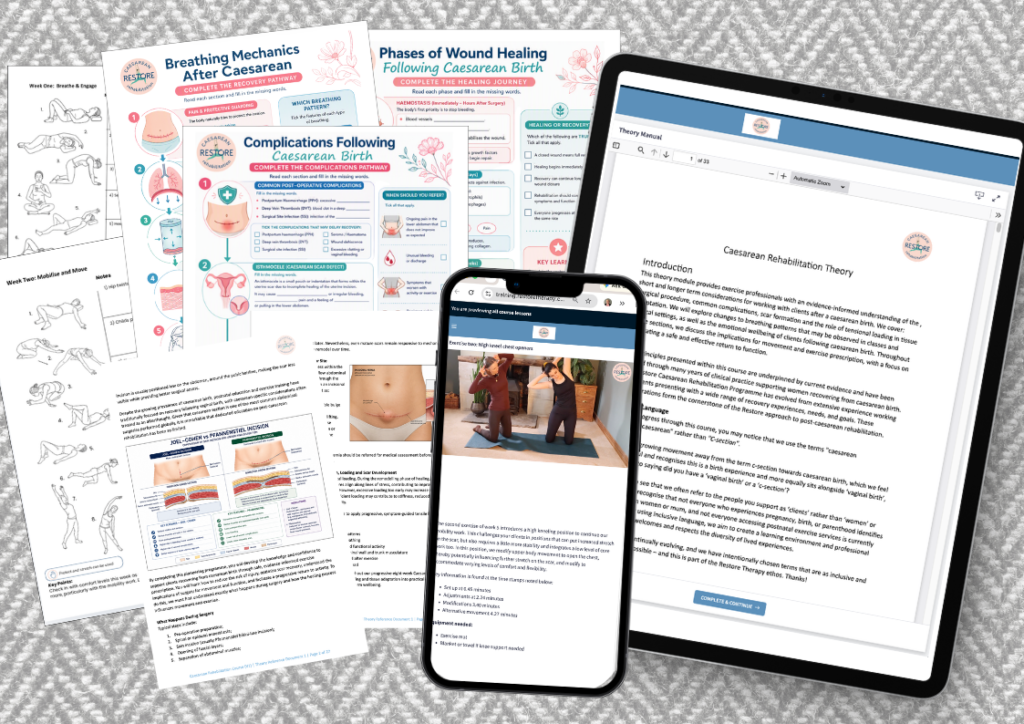
Downloadable manual, exercise reference sheet and activity printouts.
quiz questons
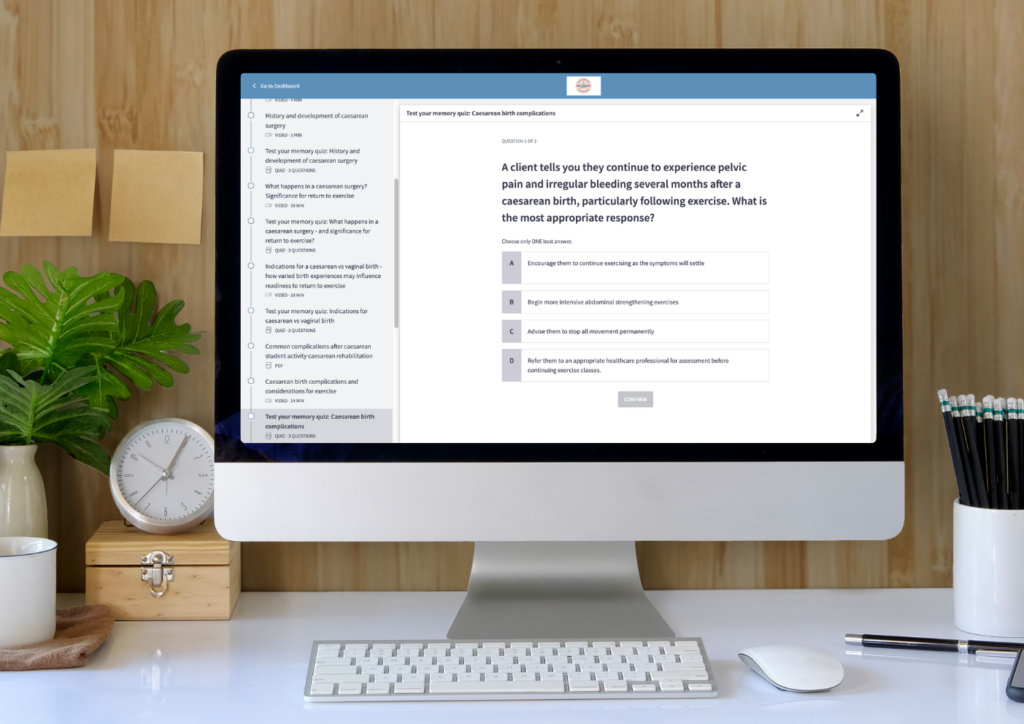
Interactive quizzes test your memory and a final multiple choice test ensures you have understood the key concepts and safety in practice.
comprehensive
Eight weeks of progressive exercises with eight exercises per week (64 total exercises) with considerations, scar specific protocols, adaptions and progressions.
certification
Professional development certificate of completion for your professional development hours (final hours TBC).
Support caesarean Recovery
At Restore Therapy, we have been pioneering change within healthcare since 2017 through a clear and consistent message: scars matter. Through our highly respected training which has been utilised into hospitals and private health clinics and in sole practitioner settings, our education is making a difference. Through better advice, and effective scar-specific rehabilitation, we want to ensure caesarean birth is recognised as a major abdominal surgery that requires surgery- and scar – specific rehabilitation protocols.
holistic approach
Develop a holistic approach that appreciates the different birth experiences your client may have had. Build confidence and acceptance through your exercise program to enhance wellbeing with biopsychosocial considerations .
scar tissue protocols
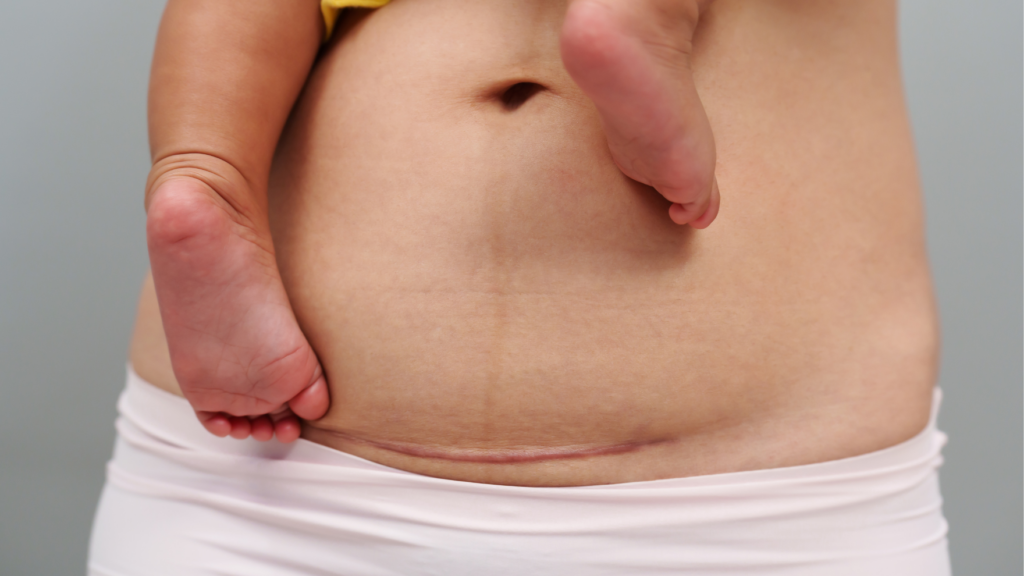
With scar specific protocols you can easily implement and teach your clients. Addressing pain and sensitivity, tightness and restrictions. Understanding of, and considerations for, the 'c-section pouch' or 'shelf' - which may be concerning your clients.
Transform your post-natal exercise
Fascial Impact
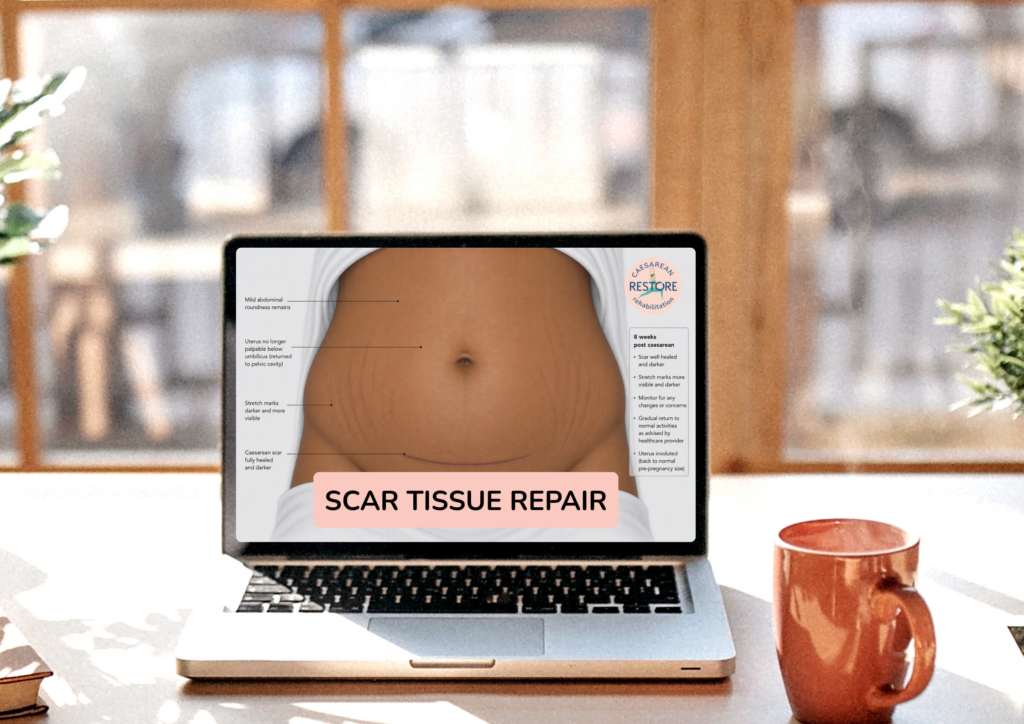
Learn how scar tissue and adhesions after a caesarean may affect movement via our fascial system. Implement protocols for scar mobilisation in early and mature scars.
Post-Surgery Recovery
Discover essential knowledge on surgical procedure, common post-caesarean complications and how these translate into movement restrictions you will observe.
Safety in practice
Identify clients at higher risk post-caesarean surgery and follow clear guidelines and adjustments to reduce discomfort and encourage engagement.
how can you use this program?
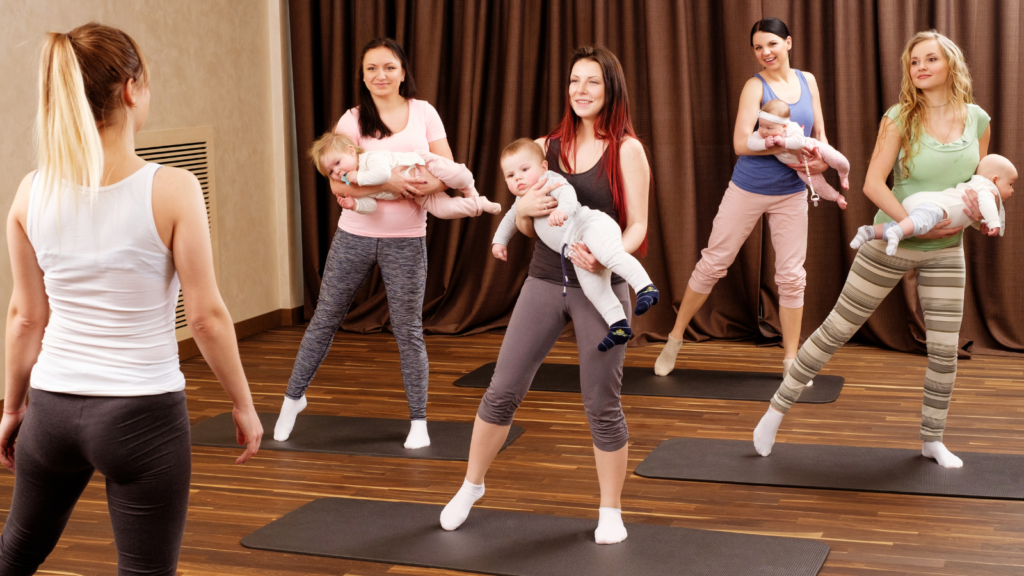
post-natal exercise classes
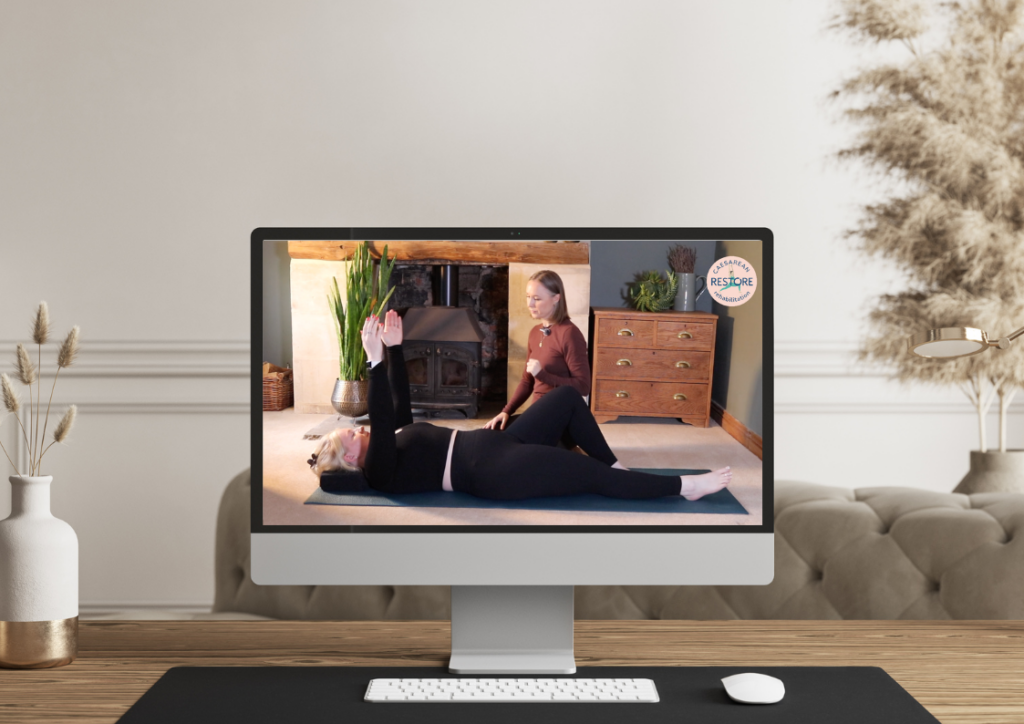
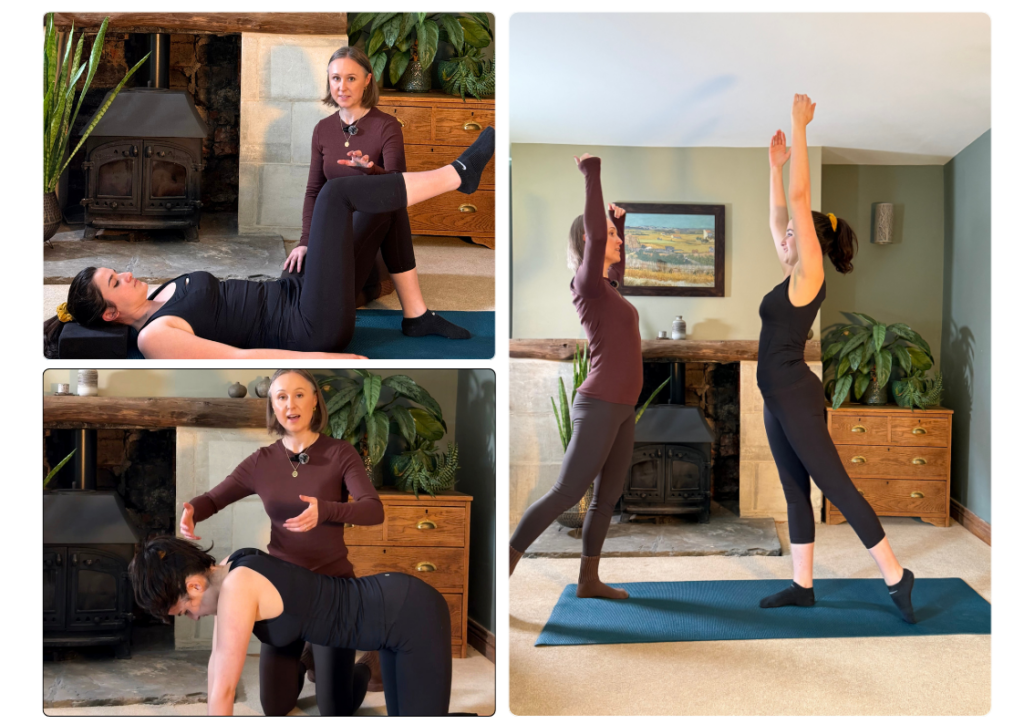
We provide an eight week program of exercises. Each week includes progressive program of movements, with adaptions and modifications that can be delivered as a post-natal group class or in a one-to-one setting.
1:1 physiotherapy or rehab
You can create a bespoke recovery program and utilise individual exercises from this program to support recovery within gyms, women's health clinics and hospitals. Suggestions for clients with mature and historic scars are also included.
full course details
Caesarean Surgery, breathing mechanics and relevance for return to exercise
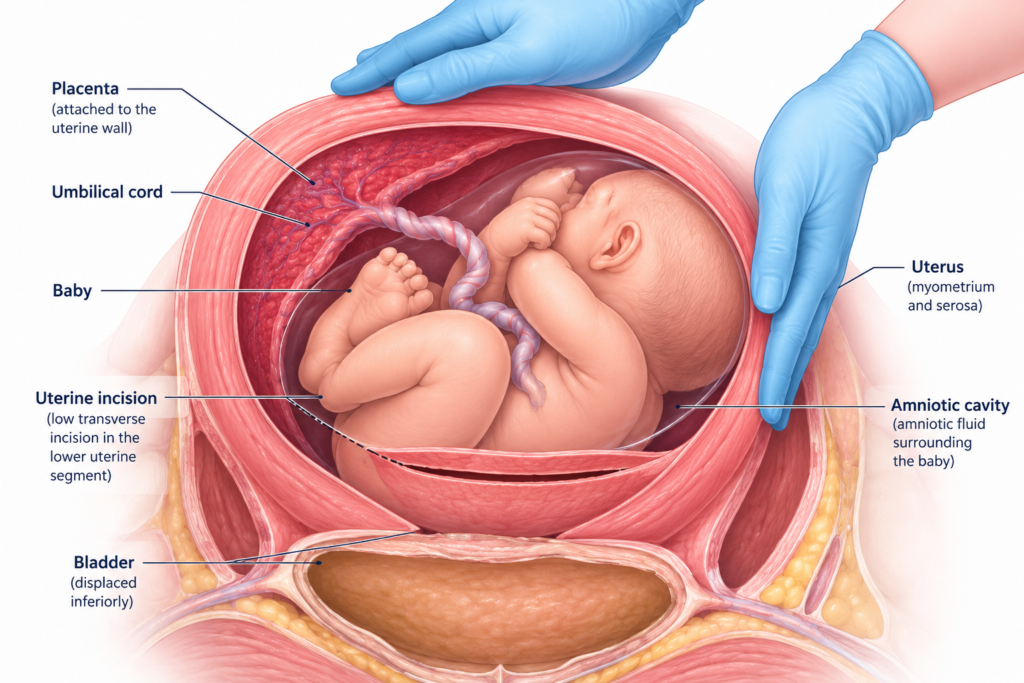
We examine how surgical trauma during a caesarean birth, pregnancy-related changes, and tissue remodelling can influence breathing mechanics, core function, force transmission, pelvic floor function, and movement confidence. Learners will also explore the role of the linea alba, sensory nerve changes, and the relationship between abdominal healing and functional recovery, developing an appreciation of how multiple body systems contribute to post-caesarean movement and exercise capacity.
Medical complications your clients may experience post-caesarean birth and factors that will impact mental health and wellbeing along with physical recovery are discussed.
By the end of this segment, learners will recognise that a caesarean birth should be viewed as both a pregnancy recovery and a major abdominal surgery. The physical adaptations of pregnancy are combined with the demands of surgical healing, creating unique considerations for exercise prescription and rehabilitation. By understanding the anatomy and physiology of recovery enables evidence-informed exercise to be used to support restoration of breathing mechanics, movement quality, load tolerance, and functional capacity, rather than focusing solely on strengthening the core.
Caesarean birth scar tissue, common complications and return to exercise
In this segment of the course, you will learn about the different types of caesarean scars, including hypertrophic, keloid, and atrophic scars, and the common complications that can influence recovery, movement, and exercise participation.
You will explore the impact of scar adhesions, caesarean “shelf” formation, and incisional hernias, and understand how these conditions may affect tissue mobility, comfort, body confidence, and exercise tolerance.
You will also learn the key principles of scar rehabilitation and how mechanical loading influences scar remodelling. The lesson will examine how exercise professionals can support recovery through progressive, symptom-guided exercise, breathing strategies, movement restoration, and appropriate early-stage recovery advice. By the end of this lesson, you will understand how these principles can be applied during exercise to help clients build strong foundations for long-term recovery and function following a caesarean birth.
Guidelines and practicalities for using the exercises
This segment of the course provides all the guidance needed for you to use this program safely and effectively. Emphasising that while superficial scar tissue may have healed by 6–8 weeks, deeper tissue healing continues for many months and recovery timelines vary between individuals. Instructors should encourage clients to avoid pain, progress gradually, monitor pelvic floor symptoms, and focus on quality of movement rather than returning too quickly to pre-pregnancy activity levels.
The lessons also highlight the importance of respecting each client’s comfort level with scar contact and understanding how numbness, scar restrictions, and diastasis recti can influence recovery.
Professionals learn to look for common symptoms associated with caesarean scars, including back or hip pain, abdominal congestion, constipation, and bladder urgency, and recognise when referral to an appropriate healthcare or manual therapy professional may be beneficial.
Warm up, cool down and scar specific protocols
In the main eight week program, the first two or three exercises of each week are specifically based around mobility but much more specific to caesarean recovery. Week on week, these variations gradually progress to become deeper and work in more dynamic ranges, hence why we have provided more of a generic overview for you here. We also include some general warm up exercises to provide you with some ideas of movements you might like to start each session within this lesson.
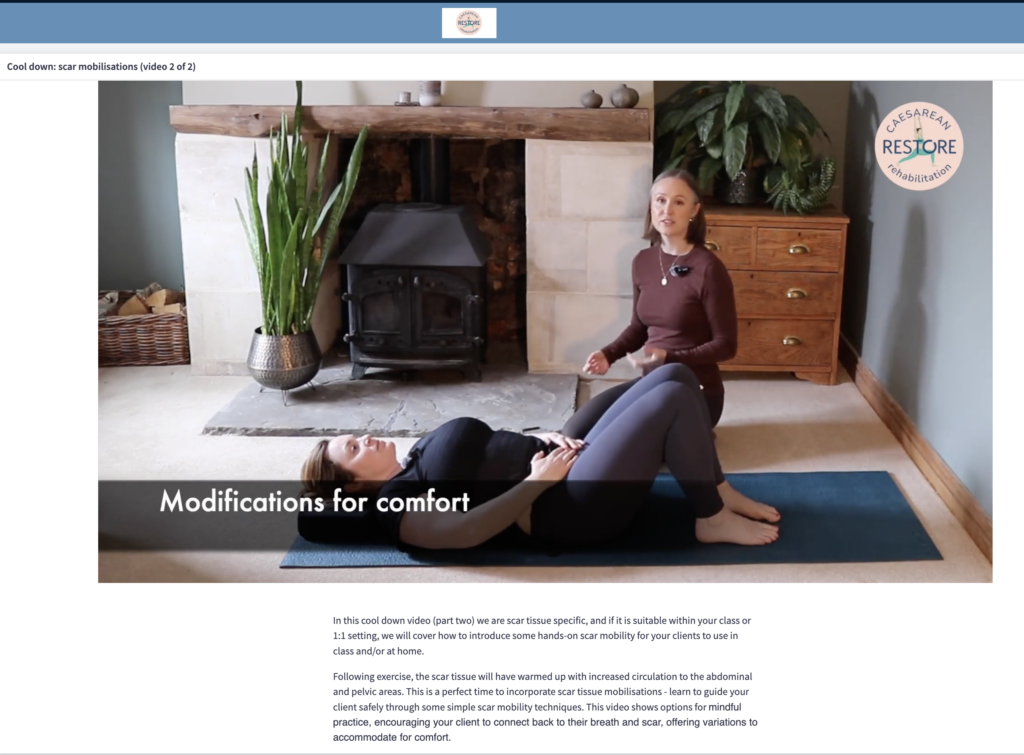
Following exercise, the scar tissue will have warmed up with increased circulation to the abdominal and pelvic areas. This is a perfect time to incorporate scar tissue mobilisations – learn to guide your client safely through some simple scar mobility techniques. The lesson here shows options for mindful practice, encouraging your client to connect back to their breath and scar, offering variations to accommodate for comfort.
Eight week Caesarean Rehabilitation exercise program
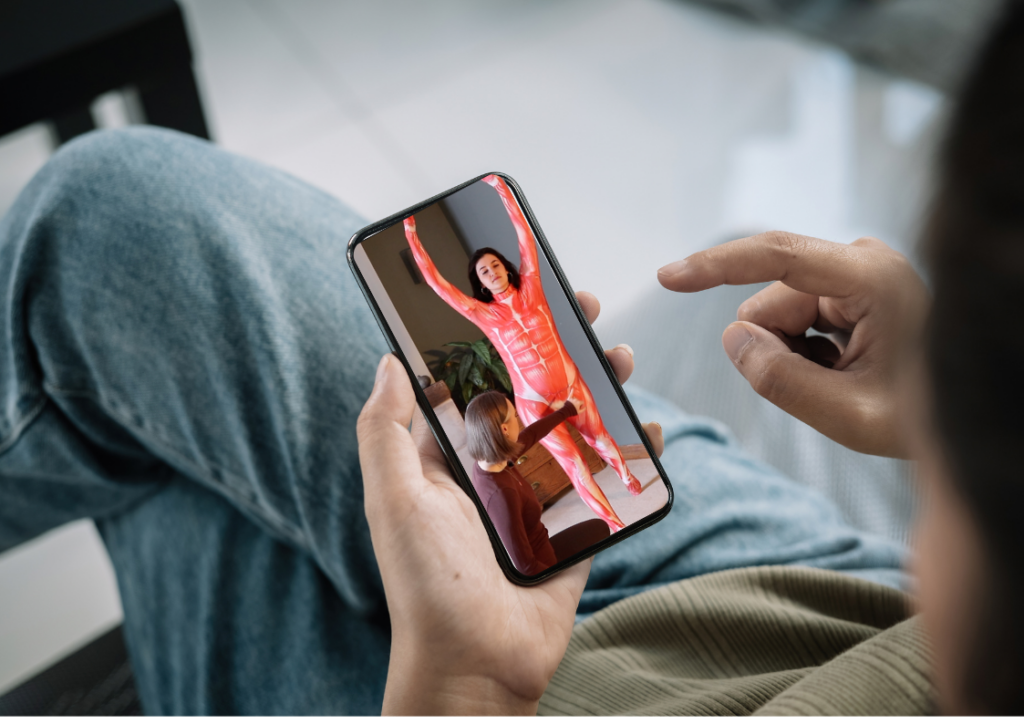
This section is separated into the eight week program. In each weekly lesson, exercises are covered one at a time in a short videos with modifications and adjustments for individual comfort. A weekly reference guide handout for you to take to class is included.
Explanations are provided for the selection of the exercise and the rationale for choice, and common symptoms that you may hear clients mentioning when they are asked to make specific movements.
Starting with a gentle week one, focussed on breathing and re-connection with the scar, and you will see that your clients will gradually be challenged more across each week. Progressively including more mobility work with an increasing core emphasis, so that by the end of the course they are developing the ability to sustain more challenging positions and subtly adjust end ranges to influence scar load and stretch.
By the final week of exercises, hip stability is challenged across a variety of positions, while upper body strength work continues alongside a strong focus on core and glute integration. Lower body exercises become increasingly functional, bringing together elements from previous weeks and highlighting improvements in stability, strength, and coordination.
Case example: Molly four months postpartum
We include three varied case examples in the Caesarean Rehabilitation program, showing you ‘real people’ with ‘real’ issues and clearly demonstrating how exercises can be used in bespoke sessions. Starting with Molly, who is four months after her second caesarean birth. Molly experienced a traumatic first birth, and shares her story of this experience. We examine her scar, assess her breathing, movement and any concerns she has followed by selecting exercises from the program that will support her recovery. Giving a clear representation of how the program can be utilised in a one-to-one setting.
Case example: Kim three and six years months post-caesarean
In the second case example we meet Kim, who has previously completed postnatal group classes with Amy Poole three years ago – she loved the classes so much she completed them twice in a row! Kim has had two caesarean births, her youngest child is now three years old. She discusses how she managed after each birth, taking a different approach to her physical and emotional recovery after her second caesarean.
We examine her scar, assess her concerns and select exercises from the program that will challenge her sufficiently at this stage. Demonstrating how the program can be utilised longer term to support strength and continued loading within a one-to-one setting.
Case example: Catherine 30+ years months post-caesarean
As we conclude the Restore Caesarean Scar-Specific Rehabilitation course, Catherine’s case leaves us with one powerful message: scars matter. More than 30 years after her caesarean birth, she continues to experience movement restrictions and discomfort directly related to her scar tissue.
This final lesson highlights why early, scar-specific assessment and rehabilitation are so important. Too many women are living with pain, restriction, and altered movement patterns that have been ignored.
At Restore Therapy we are changing healthcare since 2017 through a clear, consistent message – scars matter. Through our education programs and with better advice, support and scar specific rehabilitation, future generations of women will no longer be left to simply accept these symptoms as normal.
- Understand the surgical anatomy involved in caesarean birth and the associated recovery considerations.
- Biopsycosocial impact of scars including practical protocols to support scar connection, fascial glide and the role of exercise and progressive scar loading.
- Apply appropriate screening and exercise-readiness considerations.
- Understand scar-related considerations when designing and prescribing exercise programmes.
- Identify contraindications and indicators for referral.
- Support a safe and progressive return to exercise within professional scope of practice using an eight-week progressive exercise programme, including eight exercises per week with modifications (64 exercises in total).
- Recognise how symptom presentation may be influenced by different birth experiences and understand the primary indications for caesarean birth.
- Modify and progress exercise according to individual needs, presentation, and recovery status.
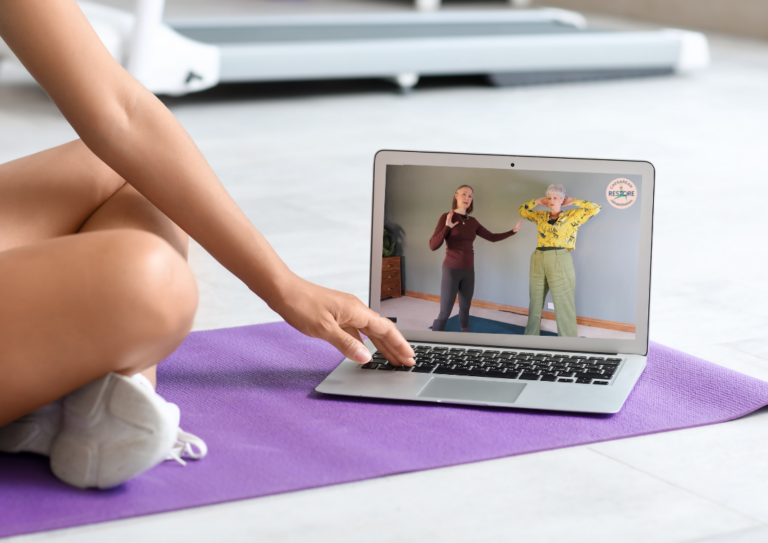
This course is delivered in video lessons with multiple choice quizzes too keep things interactive. Activity sheets and a downloadable manual build up to provide a variety of resources to support your learning. This is an advanced training for exercise professionals.
To make this course easy to fit around your busy lifestyle videos are kept to under 15 minutes so you can fit study into a lunch break or between appointments. A reference sheet listing the eight week course and reminders of the exercises and ordering are also provided.
Professional development certificate for 35 hours (excludes bonus content) will be automatically generated on completion of the final test (multiple choice). You have 12 months to complete the training and can extend beyond this with a monthly subscription.
On completion, the bonus section includes a logo and some infographics to support you in marketing this course.
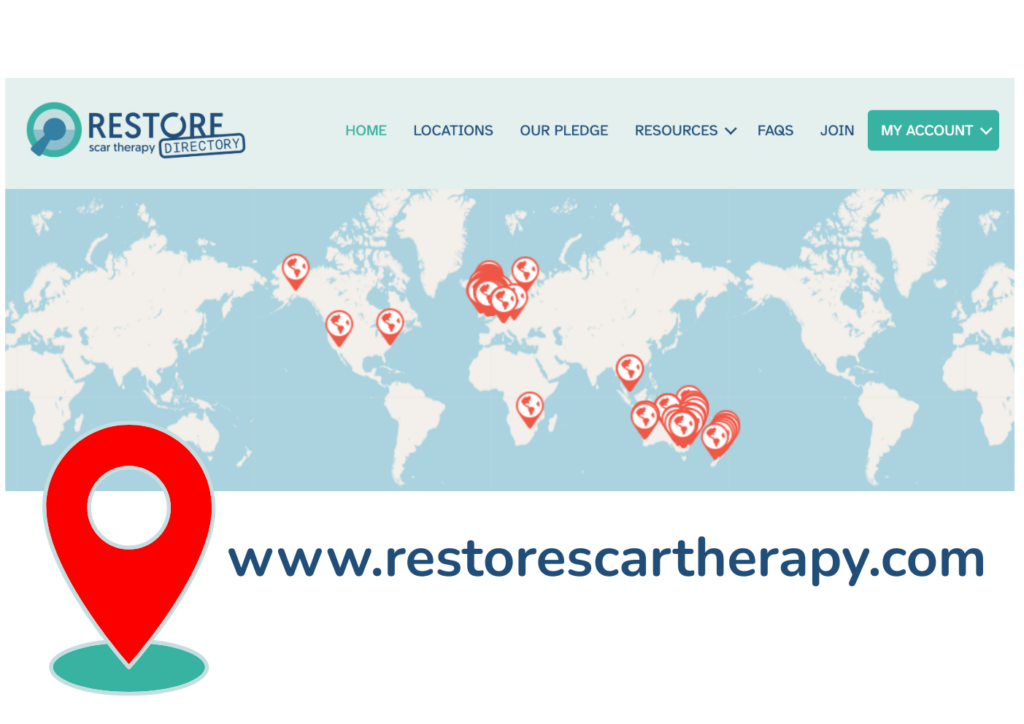
List your details on the Restore Scar Therapy Directory– a global resource for people looking for support afterr surgery or injury to find details of certified healthcare and therapy professionals to assist their recovery.
Learn more about
Caesarean section surgical procedure
Scar remodelling and tensional forces
Pain and common complications
Diastases recti and caesarean scars
Diaphragmatic breathing after caesarean
Core function and pressure changes
Supporting healthy function
Avoiding injury during exercise
Safe and progressive program
Biopsycosocial considerations
Who is this course suitable for?
This is an advanced course in caesarean specific recovery protocols. This course is only suitable for exercise professionals with an existing professional qualification who have basic or advanced knowledge of postnatal rehabilitation. If you do not have a professional qualification in exercise you should not enrol onto this course.
✔ Exercise professionals working in postnatal recovery
✔ Pelvic physiotherapists
✔ Personal trainers supporting recovery and return to exercise post-birth
✔ Postnatal pilates instructors
✔ Postnatal rehabilitation specialists
X Massage therapists, midwives and doulas who are not qualified to prescribe exercise are not qualified to take this course