
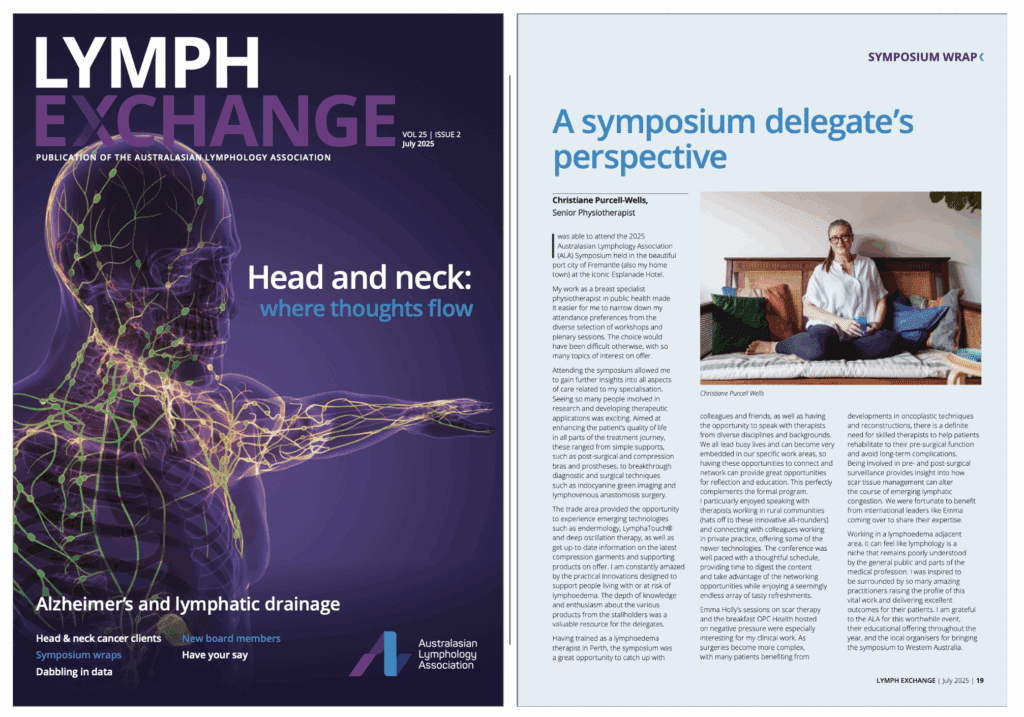
A Symposium Delegates perspective by Christiane Purcell Wells
I was able to attend the 2025 Australasian Lymphology Association (ALA) Symposium held in the beautiful port city of Fremantle (also my home town) at the iconic Esplanade Hotel.
My work as a breast specialist physiotherapist in public health made it easier for me to narrow down my attendance preferences from the diverse selection of workshops and plenary sessions. The choice would have been difficult otherwise, with so many topics of interest on offer.
Attending the symposium allowed me to gain further insights into all aspects of care related to my specialisation. Seeing so many people involved in research and developing therapeutic applications was exciting. Aimed at enhancing the patient’s quality of life in all parts of the treatment journey, these ranged from simple supports, such as post-surgical and compression bras and prostheses, to breakthrough diagnostic and surgical techniques such as indocyanine green imaging and lymphovenous anastomosis surgery.
The trade area provided the opportunity to experience emerging technologies such as endermology, LymphaTouch® and deep oscillation therapy, as well as get up-to-date information on the latest compression garments and supporting products on offer. I am constantly amazed by the practical innovations designed to support people living with or at risk of lymphoedema. The depth of knowledge and enthusiasm about the various products from the stallholders was a valuable resource for the delegates.
Having trained as a lymphoedema therapist in Perth, the symposium was a great opportunity to catch up with colleagues and friends, as well as having the opportunity to speak with therapists from diverse disciplines and backgrounds. We all lead busy lives and can become very embedded in our specific work areas, so having these opportunities to connect and network can provide great opportunities for reflection and education. This perfectly complements the formal program.
I particularly enjoyed speaking with therapists working in rural communities (hats off to these innovative all-rounders) and connecting with colleagues working in private practice, offering some of the newer technologies. The conference was well paced with a thoughtful schedule, providing time to digest the content and take advantage of the networking opportunities while enjoying a seemingly endless array of tasty refreshments.
Emma Holly’s sessions on scar therapy and the breakfast OPC Health hosted on negative pressure were especially interesting for my clinical work. As surgeries become more complex, with many patients benefiting from developments in oncoplastic techniques and reconstructions, there is a definite need for skilled therapists to help patients rehabilitate to their pre-surgical function and avoid long-term complications.
Being involved in pre- and post-surgical surveillance provides insight into how scar tissue management can alter the course of emerging lymphatic congestion. We were fortunate to benefit from international leaders like Emma coming over to share their expertise.
Working in a lymphoedema adjacent area, it can feel like lymphology is a niche that remains poorly understood
by the general public and parts of the medical profession. I was inspired to be surrounded by so many amazing practitioners raising the profile of this vital work and delivering excellent outcomes for their patients. I am grateful to the ALA for this worthwhile event, their educational offering throughout the year, and the local organisers for bringing the symposium to Western Australia.